
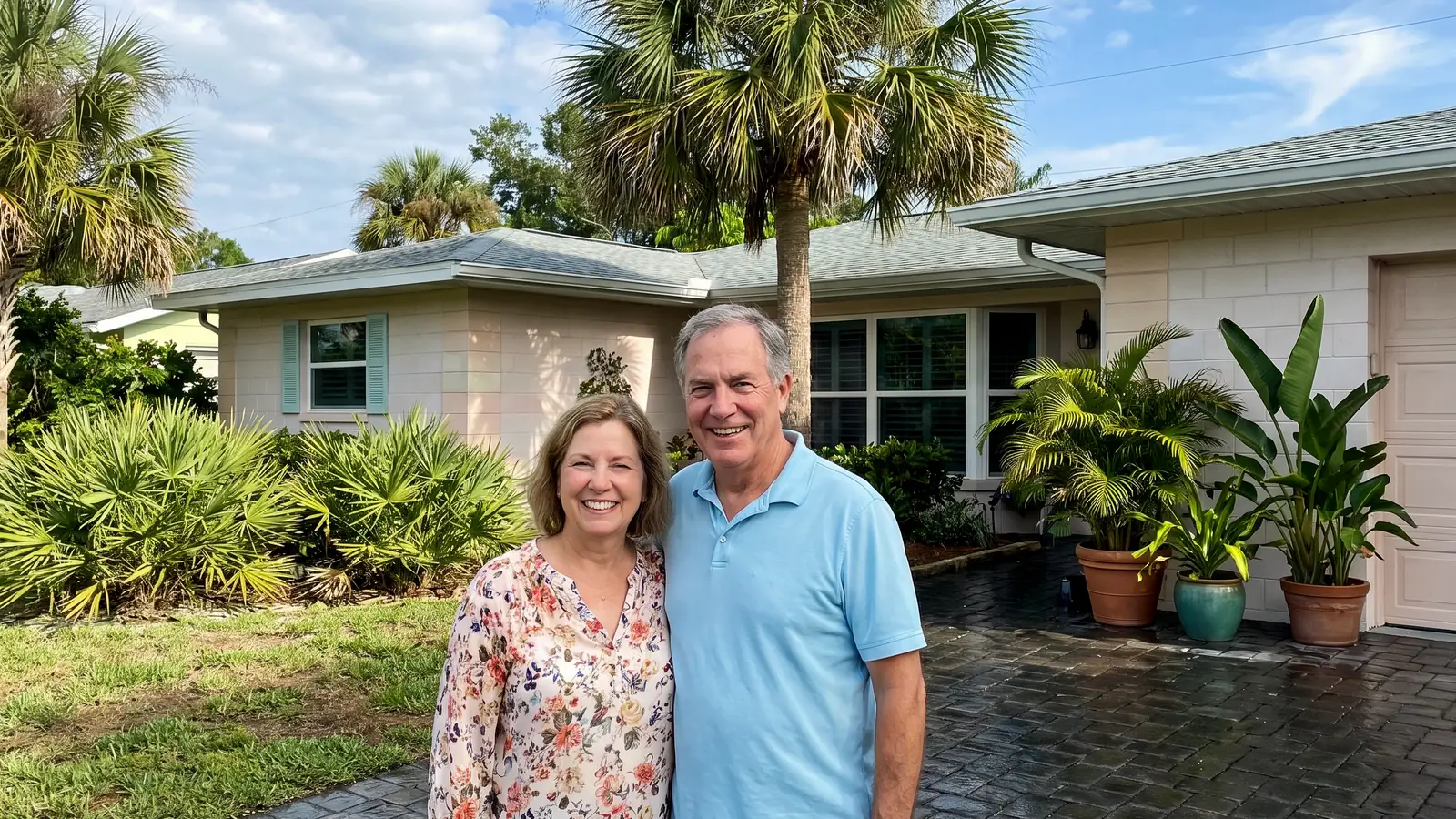
Paver sealing for Homosassa Springs homes
Paver Sealing in Homosassa Springs, FL
Warm spring water feeds the Homosassa River, and (352) 820-2319 gets you a free paver sealing estimate in Homosassa Springs.
- Brings out deeper paver color
- Fresh joint sand helps lock pavers in place
- Gives weeds less room to grow
- Makes the surface easier to keep clean
- Free estimate, no obligation
Request a Free Estimate
Free, no obligation.
Fast, careful paver sealing in Homosassa Springs
Paver sealing is available in Homosassa Springs, from the homes east of US 19 out toward Lecanto to the quiet streets near Sugarmill Woods. A local contractor does the washing, the sanding and the sealing for driveways, lanais and pool decks, and the estimate comes at no charge. Call (352) 820-2319 and expect an answer inside 1 business day, usually sooner than that.
Maybe your walkway has gone gray and spotty, and the joints have turned green on the shady side. A good cleaning and a new coat bring the color back in one even tone. To ask first, ask for a free estimate and say which surface bothers you.
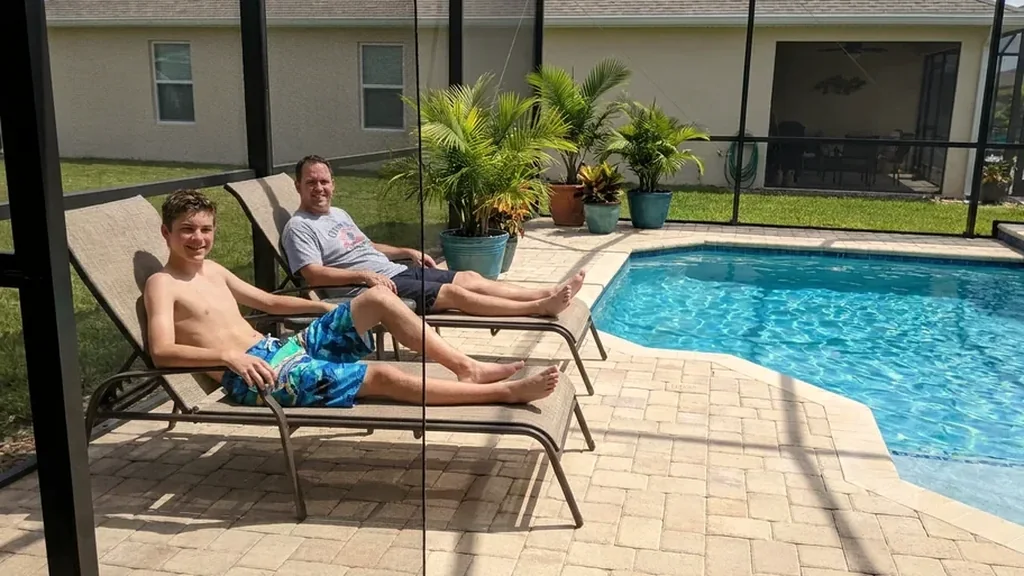
Why hire a local paver sealing contractor in Homosassa Springs?
Homosassa Springs homeowners choose a local contractor because springs, a brackish river and fast-draining sand all affect how pavers age. Want to know how that plays out on your street? ask for a free estimate.
A free look
A contractor visits your Homosassa Springs driveway, patio and walkway at no charge. You hear the price before agreeing.
Know the going rate
Going rates around Tampa Bay sit between $1 and $3 per square foot, with the wash, sand and sealer included. Use that range to judge any bid.
Matte or glossy
Matte blends with the trees and landscaping around Homosassa Springs homes. A wet look is glossier and shows scuffs earlier.
Up to you
You set the date and pick the finish. Asking for an estimate here commits you to nothing.
Get Your Free Estimate in Homosassa Springs
Tell us about your pavers in Homosassa Springs.
Free, no obligation
What paver problems show up most in Homosassa Springs?
Damp air near the springs and the river
Nearly a quarter of Citrus County is covered by water, and the Homosassa River begins at the springs and runs to the Gulf. The river changes slowly from fresh to salt, which makes it brackish. Damp air hangs around, and pavers that stay wet in the shade grow a green film. If sealer goes over that film, the green shows through the coat. You may notice it first on the north side of a walkway or along a wall that never gets afternoon sun. The wash comes first, and it is the step that decides how the finish looks. Down at Old Homosassa the river runs brackish as it nears the Gulf, and homes along it sit right beside that water. Pavers there sit in damp air year round. Because the community sits east of US 19 and 98, many homes are a short drive from the river and the park, and damp air does not stop at the highway.
Fast-draining sand that moves the joints
Candler sand covers about 17 percent of Citrus County, and county soil data says about 36 percent of the land drains at a rapid rate. Water moves through sand quickly, and it carries joint sand with it. A hard summer downpour can pull a thin line of sand out of a joint in a single afternoon. Gaps open along the edges, weeds take hold, and pavers start to rock. You may see small dips where sand has settled low. Those dips are a clue that the joints need refilling. Fresh sand goes back in before sealing so the surface can hold together. The county's sandy soil lets water pass through fast, which is why a puddle that vanishes in minutes can still carry away joint sand.
Silt film after high water
About 10 percent of Citrus County land floods occasionally or more, according to county soil data. Standing water leaves a thin film of silt on pavers, and the film is easy to miss. It feels slick underfoot and makes the color look flat. Sealer over silt would trap it under the coat. A contractor checks low spots for dull, slick patches and picks the wash method from there. If your lot has taken water before, mention it when you ask for the estimate. After a flood or a heavy rain, a slick patch that looks like clean pavers may be silt, and a quick test with a hose shows the difference.
Rust from well-fed sprinklers
According to UF/IFAS, most well water in Florida holds a lot of iron. When a sprinkler system pulls from a well, orange stains build up where the spray lands. A driveway edge or a walkway beside the lawn is the usual place to see it. The marks often form a fan shape that matches the sprinkler spray. Stain removal happens during the wash, because a coat over rust makes it permanent. Sprinkler heads aimed at a walkway or a driveway apron are the usual culprits. The stains often copy the spray pattern, which makes the cause easy to spot. Rust marks usually follow the spray pattern of a sprinkler, so the contractor starts by checking where the heads sit.
A coat that nobody remembers
Pavers change hands, and so does the paperwork. A past owner may have used a solvent-based sealer, which rules out a water-based coat on top. A small test on a hidden corner shows what is already there. The test costs nothing and takes only a short while. That test saves a failed job and a peeling finish. A surface that never saw sealer means an easier job, and the estimate shows it. Some Homosassa Springs homes have been owned by several people, and a patch test is cheaper than a failed coat.
Does paver sealing change near the river compared with east of US 19?
Yes, because the springs and the river sit west of the highway, while the Homosassa Springs community lies east of it. Homes close to the water deal with more damp air, so green film returns faster there than on sunny inland lots. The community sits between Crystal River to the northwest, Lecanto to the east and Sugarmill Woods to the south. When you ask for a free estimate, say if you are on the river side or the inland side.
The 2020 census counted about 7,470 housing units in Homosassa Springs, and 16.1 percent were vacant. A home that sits empty for months can gather dirt and algae on its pavers. If you own or look after one, call (352) 820-2319 and ask for a quote that covers every surface on the lot.
About 10 percent of residents live in rural areas, so some properties sit at the end of long driveways. A long run of pavers means a larger total, and price follows square feet. Tell the contractor how long your drive is when you ask for a free estimate, so the day can be planned around it.
What does paver sealing cost in Homosassa Springs?
Prices published around Tampa Bay land between $1 and $3 per square foot for washing, sanding and sealing. In Homosassa Springs the final figure depends on how much green film, rust and old sealer the pavers carry. A long drive and a pool deck add square feet quickly. To get a price for your pavers, ask for a free estimate and ask for the no-charge estimate.
Repairs also change the number. Sunken or tilted pavers must be fixed before sealing, and where rock sits close to the surface the work can take longer. Hand-carried gear on a tight lot adds time too, and so does a pool deck with lots of screen and planter edges. A call to (352) 820-2319 is enough to learn which of these touch your lot.
| Paved area | Typical example | Clean, sand and seal |
|---|---|---|
| 300 sq ft | Small patio or walkway | $300 to $900 |
| 600 sq ft | Two car driveway | $600 to $1,800 |
| 1,000 sq ft | Large driveway or pool deck | $1,000 to $3,000 |
| 1,500 sq ft | Driveway plus pool deck | $1,500 to $4,500 |
Math based on the $1.00 to $3.00 per square foot that Tampa Bay paver companies publish. Your contractor sets the actual price after seeing the surface. Repairs, leveling and stripping failed sealer are usually extra.
How does a paver sealing job work in Homosassa Springs?
Test a corner first
The contractor goes over your Homosassa Springs driveway, patio and walkway and marks tilted or sunken pavers. A small test spot shows whether an old sealer is down and what type it is. That decides the product. Homes beside the river, the park or a low drainage ditch get a closer look at drainage and shade. Any steps or retaining edges are checked for movement.
Wash off film, silt and rust
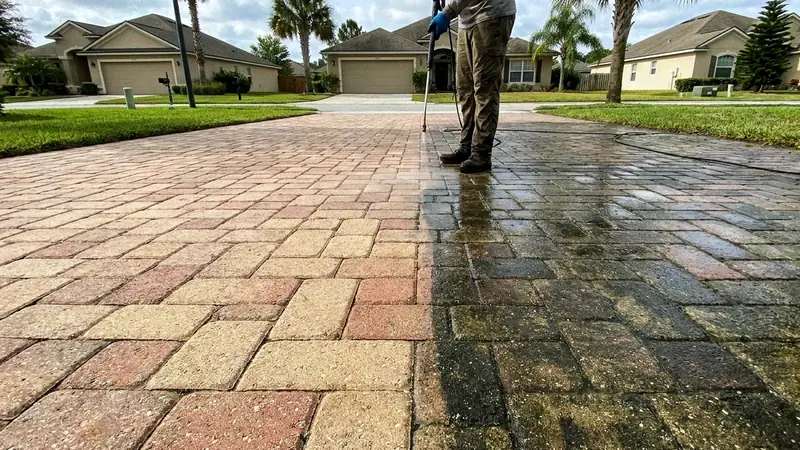
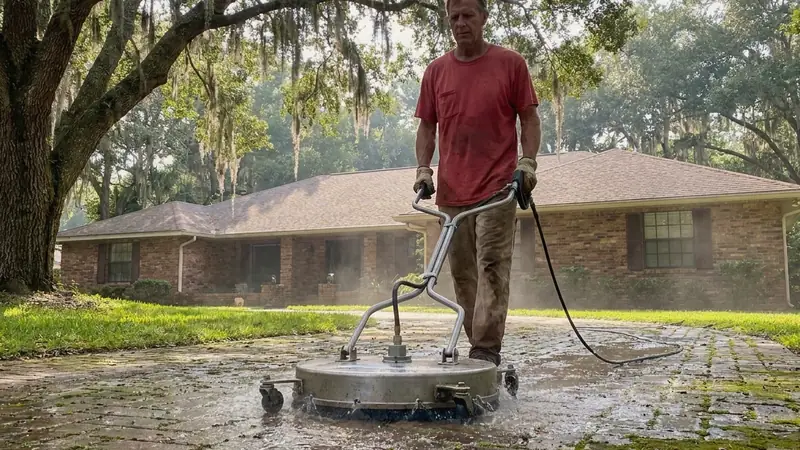
Algae, silt and orange stains come off, along with the dull haze that builds in damp air. Care is taken near screens, plants and the pool edge. Lanais and pool decks are washed to the same standard as the drive, and any stain gets its own treatment before sealer comes out.
Put new sand in the joints
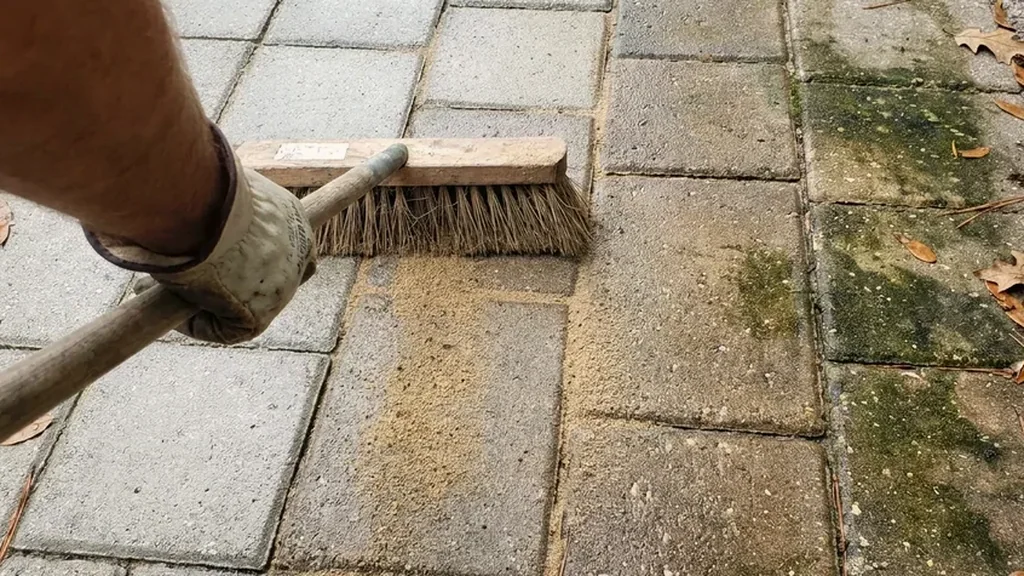
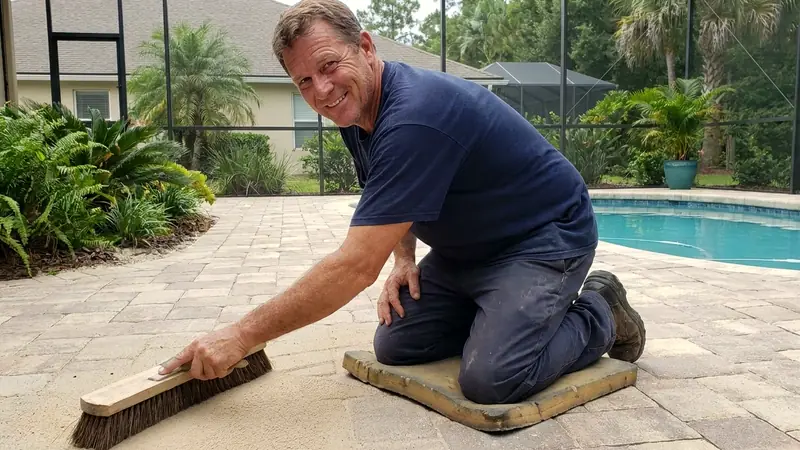
Washing pulls sand out of the joints, so new sand goes in. On fast-draining ground, empty joints open the door to weeds and loose pavers. The sand is swept in, the contractor checks for low spots, and any paver that rocks is reset. The sand should suit the joint width. Fresh sand is swept in on a dry day so it does not clump.
Wait for dry pavers
Wet pavers hold moisture under the sealer. Shade, humid air and a recent storm all slow drying, and a damp week can add a day or two. The contractor waits and watches the forecast. Patience here keeps the coat clear. Shaded sides near trees and the house dry last, so they are saved for the end.
Seal and keep off
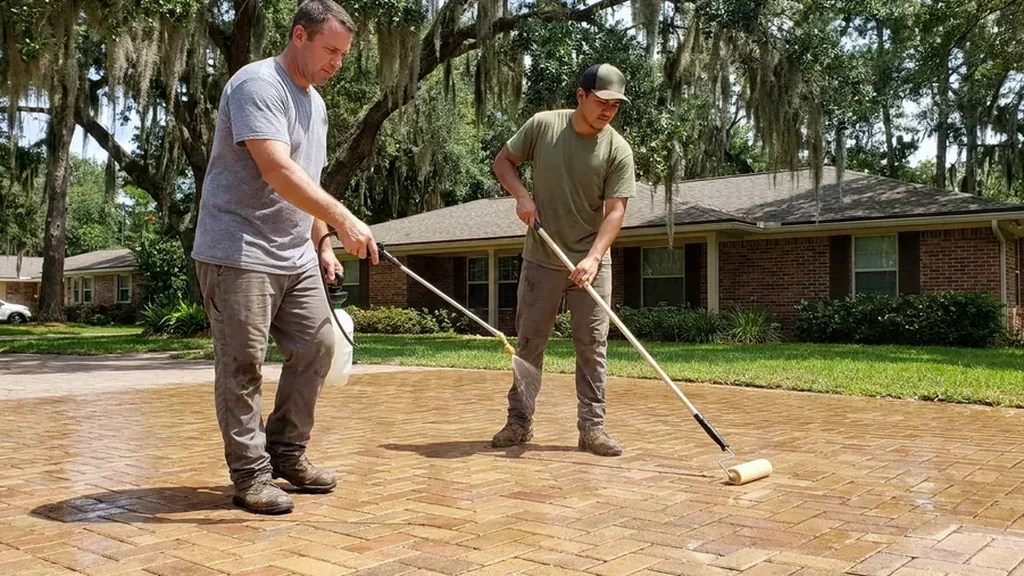
Many pros spray the sealer and back-roll it so it reaches into the joints and evens out. Edges near grass and walls are done with care. The contractor says when walking is safe again and when the cars may pull in. Walk the job afterward and ask about anything that looks uneven. The first pass goes on the sunniest area, and the shaded side follows once it has dried.
Complete paver services in Homosassa Springs
Sealing near the springs follows four steps: wash, new sand, drying time and the coat. The wash lifts green film and silt. Sealer goes on last so nothing sits trapped beneath it. Call (352) 820-2319 to ask how long each step runs for your lot.
Cars and boat trailers load the driveway, while lanais and pool decks catch humid air and splash. Walkways beside the lawn pick up rust from sprinkler water. A long drive to the road adds square feet but is simple to work. When you ask for a free estimate, list every surface you want done.
What is on the pavers now picks the product, because a solvent-based layer rules out a water-based one. Then you choose matte, which is quiet, or a wet look, which is glossy and gives scuffs away earlier. Call (352) 820-2319 and ask which suits your home.
Summer storms roll in from June through September, so a Homosassa Springs date can shift. A coat needs a dry surface, and shaded pavers take longer to dry than sunny ones. A contractor who watches the sky protects your finish, and a flexible date is a sign of careful work. For a day that fits the weather, ask for a free estimate.
Questions to ask before you hire
- Can I get a matte finish if I do not want the wet look?
- How do you treat the green algae that builds up near my sprinklers and downspouts?
- What do you use to get rust stains from a well-water sprinkler system off the pavers?
- Will you test a small spot first to see how my pavers take the sealer?
- Do you refill the joints with new sand after the wash, and what kind?
- Do you cover my shrubs and landscape lights before you start spraying?
- Will you walk the finished job with me before I pay?
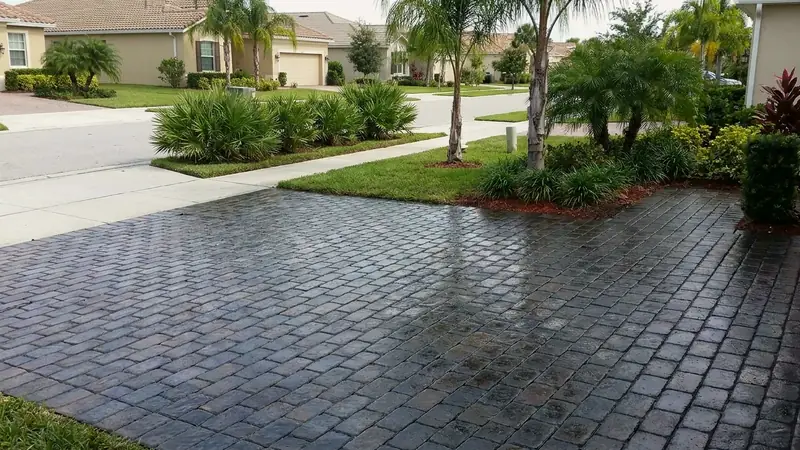
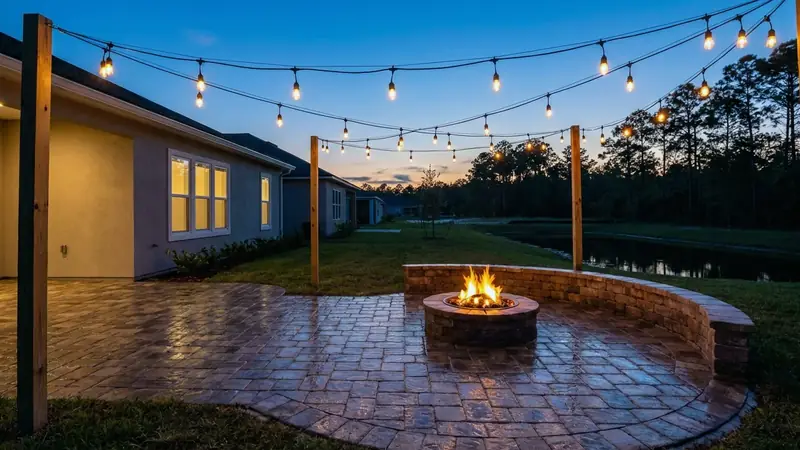
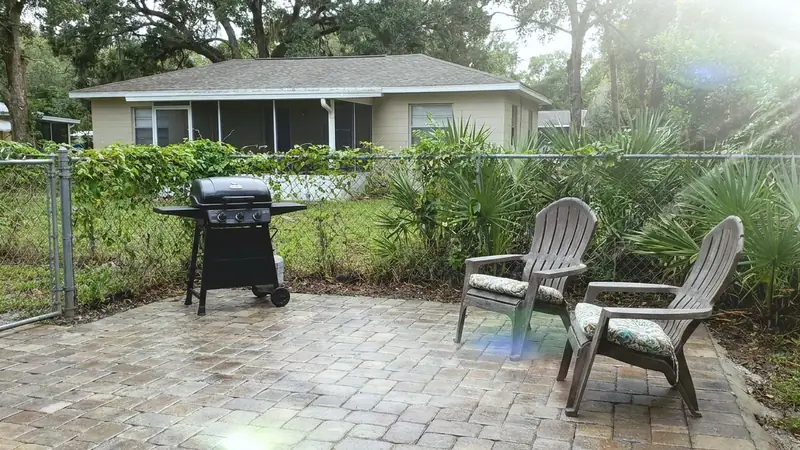
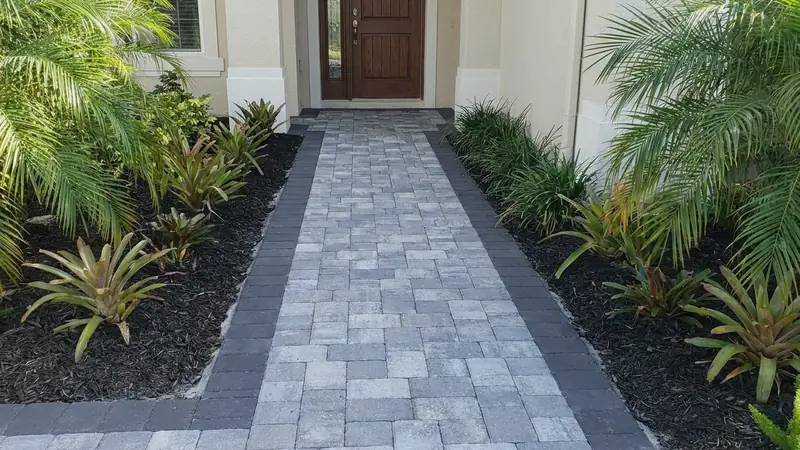
What do sealed pavers look like around Homosassa Springs?
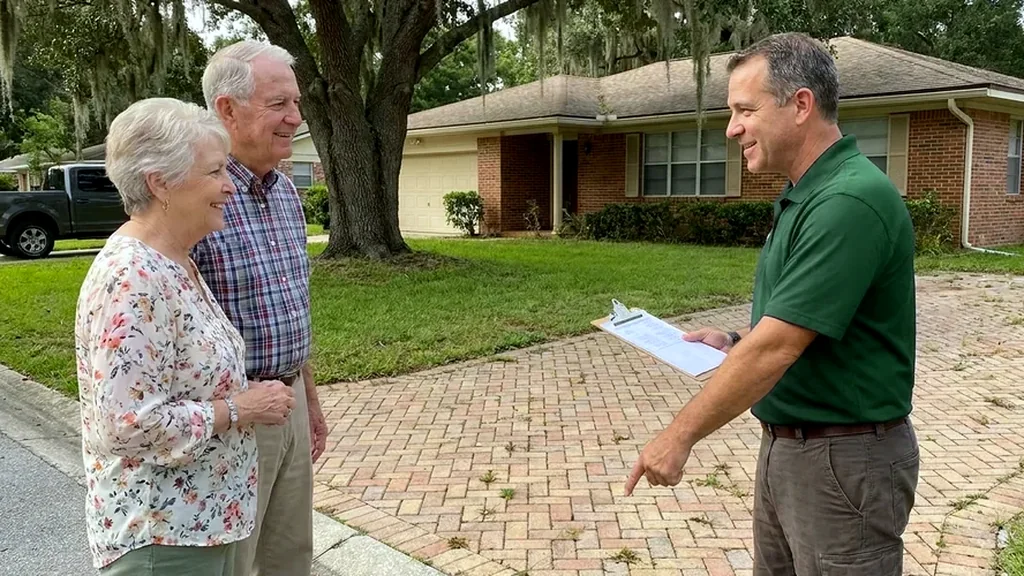
Why local matters in Homosassa Springs
Someone who works the Homosassa Springs area knows the river and the springs shape both the ground and the air. That means asking about low spots, standing water and shade before quoting, and knowing a home near the water ages its pavers differently from one inland. Contractors from outside Citrus County may skip those questions. To reach one who covers this part of the Nature Coast, call (352) 820-2319.
Sprinklers come up too. UF/IFAS says iron is common in Florida well water, and rust stains follow. A local contractor asks if your irrigation runs on a well. ask for a free estimate and mention it, and decide later whether to hire anyone.
Timing is the last piece. Storms come in from June through September, and sunny mornings can turn gray by afternoon. A nearby contractor plans around that and can move the day without fuss. Call (352) 820-2319 and ask what happens when rain moves in.
Does it help to hire a contractor who knows the Homosassa Springs area?
Yes, because the community takes its name from a warm spring that draws manatees to Homosassa Springs Wildlife State Park. The springs form the head of the 7.7-mile Homosassa River, which runs west to the Gulf. Old Homosassa and Monkey Island sit along that river, and the island was named for monkeys moved from the park in the 1960s. If you live near the water, ask for a free estimate.
Visitors have come to the springs since the early 1900s, when a railroad along Fishbowl Drive let passengers off to walk to the water. The Norris Development Company bought the property in 1964, and the county later bought it to protect it. Citrus County itself was created in 1887 and named for its citrus groves. If you are near any of them, call (352) 820-2319 and name your street.
Frequently Asked Questions
How often should pavers be resealed in Homosassa Springs, Florida?
Budget for a gap of two to five years, which matches what companies tend to quote. A Tampa Bay paver company names sun, heavy traffic, sprinkler spray and trees as the things that cut it short, so a lot with all four sits on the short side. Mark the date when the job is done. If your trees drop leaves on the drive, mention that, because leaf stains can shorten the time between coats.
How much does it cost to seal outdoor pavers in Homosassa Springs?
The going range around Tampa Bay is $1 to $3 per square foot, with washing, new sand and sealer in the price. A long driveway or a big lanai pushes the square feet up, and green film or rust adds wash time. The estimate prices each area. A written quote makes it easy to compare two bids side by side.
What is a good paver sealer to use in Florida?
Two types are used here, water-based and solvent-based, and whatever is on the pavers now decides which one can go on. Get the product name and the finish in writing so the next coat can match.
Should a Homosassa Springs homeowner seal pavers without a contractor?
Many homeowners choose to hire one, and that is a fair choice for a job with this many steps. The work involves washing, replacing joint sand, waiting for a fully dry surface and applying an even coat, and mistakes can cloud the finish. A no-charge estimate shows the cost up front, before you decide.
What are the downsides of sealing pavers near the Homosassa River?
Coats wear and need renewing, and a wet look reveals scuffs earlier than matte. Damp river air can bring green film back on shaded pavers, which means a re-wash later. The wet season can also move your date.
Which finish should I pick, matte or wet look?
Pick matte for a quiet, natural look that hides marks, which suits a busy driveway. Pick a wet look for shine if you accept scuffs that show earlier. A sample on a spare paver settles the question fast. Ask the contractor to bring both finishes on the same sample paver.
What happens to the joint sand when pavers are washed in Homosassa Springs?
The wash takes the old sand out, so a contractor puts new sand in before the coat. On fast-draining ground that matters even more, because sand keeps weeds out and holds pavers tight. Ask what sand is used and how the joints are checked afterward. Keep a photo of the joints before and after so you can compare in a year.
Who do I talk to about a Homosassa Springs estimate?
A local contractor inspects your pavers and quotes a price with no charge and no obligation. You can count on an answer within 1 business day, and often well before that.
Ready for a Free Estimate in Homosassa Springs?
Call (352) 820-2319 and tell us about your pavers.
Free, no obligation